One Day at Mont Saint-Michel, Hour by Hour
In this guide
- The shape of the day
- Before ten: the hour that changes everything
- Arriving: car park, shuttle, gate
- The abbey, and why you do it first
- The Grande Rue and the ramparts
- Where lunch fits
- What time is the tide doing something?
- Two versions of the same four hours
- If you are on a coach from Paris
- If you can stay for the evening
- What to cut if you are short
- Does the size of your group change the plan?
- If you have two days instead of one
- What changes when it rains
- Frequently asked
The shape of the day
Almost every organised departure gives you about four hours on the island. That number is the whole planning problem, because it sounds generous and spends faster than you expect. Three of those hours are usable inside the walls once you take out the shuttle queue at each end and the 350-metre walk from where it drops you.
What follows is those hours laid out by the clock, in the order that works. It is built around one rule: the abbey closes and the village does not.
Before ten: the hour that changes everything
If you have any control over your arrival time, use it here rather than anywhere else. The coach parties out of Paris reach the car park between eleven and one, and travellers describe the Grande Rue as slow going by noon and the abbey as busiest between eleven and three.
One reviewer with a timed abbey slot arrived at a quarter to ten and walked straight past a queue. Another advises the late afternoon for the same reason from the other end. The middle of the day is the part to avoid, and a 7am departure from Paris is really a way of buying that.
Arriving: car park, shuttle, gate
Cars stop at Beauvoir, two and a half kilometres out. From there:
- Le Passeur, free all year, a maximum wait of about twelve minutes, and it sets you down 350 metres short of the ramparts.
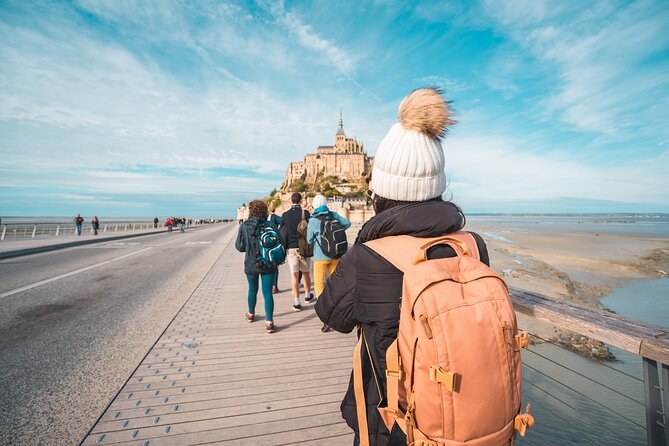
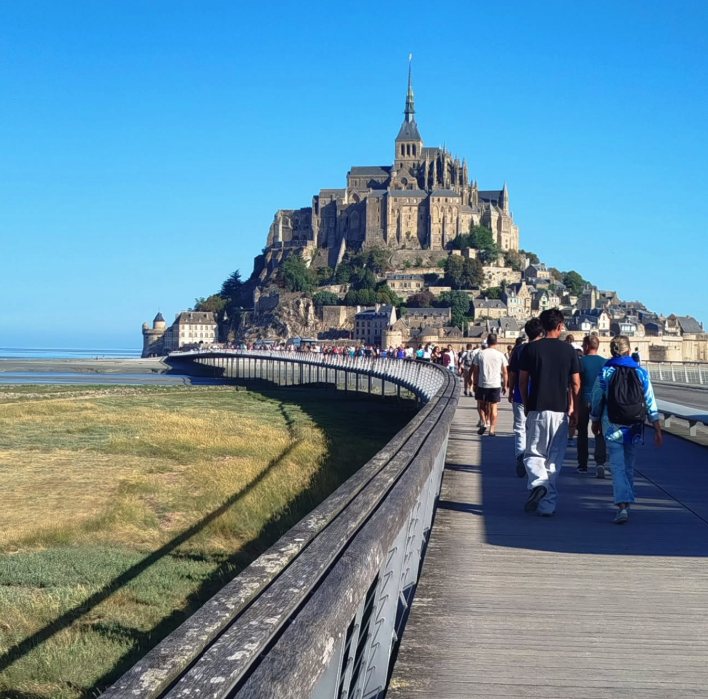
- Or walk it — about forty minutes, flat, across the bridge, with the Mont growing in front of you the whole way.
- Or the Maringotte, horse-drawn and paid, on the same route.
Budget twenty minutes from car door to gate, more at midday. The shuttle page has the timetable by season.
The abbey, and why you do it first
Go straight up. The abbey stops admitting visitors an hour before it closes — five o’clock for most of the year, six in high summer — and the streets below it never close at all. Doing the village first and the abbey afterwards is how people end up at a shut door with daylight left.
Allow an hour and a quarter inside, which is what travellers who have done it advise and roughly what a guided visit takes. Around 150 steps, from the almonry at the bottom to the west terrace at the top. What you walk through is set out level by level.
The Grande Rue and the ramparts
One street climbs from the gate to the abbey, lined with creperies, restaurants, souvenir shops and small museums. It is about 200 steps, and in August it is the busiest 200 steps in Normandy.
The rampart walk is the answer to that. It runs parallel, it is far quieter, and it has the bay on one side the whole way. If the Grande Rue is packed when you arrive, go up on the ramparts and come down through the street later, once the coaches have gone.
Where lunch fits
After the abbey, not before. The restaurants fill between twelve and two along with everything else, and eating early costs you the quiet hour inside the building. Several coach departures do not include lunch, so it is your own money either way.
What to order: agneau de pré-salé, the salt-meadow lamb grazed on the polders behind the Mont, which carries a protected designation of origin. The bay page explains why it tastes the way it does.
What time is the tide doing something?
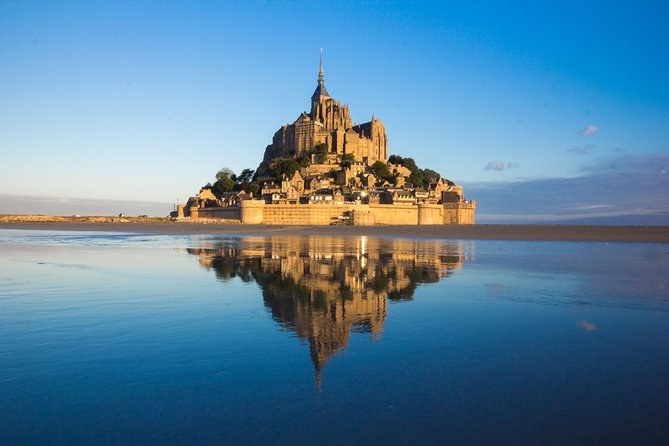
Worth checking before you fix the shape of the day, because it is the one variable you cannot influence and can entirely predict. Tide coefficients are published a year ahead. Above about 90 the sea returns visibly across the bay; above 100 it can reach the ramparts and flood the esplanade.
If your date carries a big coefficient, arrange to be on the bridge or the west terrace about two hours before high water. Reading a coefficient takes about a minute once you know what the number means.
Two versions of the same four hours
| Abbey first (recommended) | Village first | |
|---|---|---|
| First 20 minutes | Shuttle and walk to the gate | Shuttle and walk to the gate |
| Next 20 | Straight up the Grande Rue | Shops and photographs |
| Next 75 | Inside the abbey | Lunch, in the queue with everyone else |
| Next 40 | Ramparts, west terrace, the bay | Up the Grande Rue |
| Last 45 | Lunch, then the street coming down | Abbey — if it is still admitting |
| Risk | None | The door closes an hour before the abbey does |
The same four hours, spent two ways. The right-hand column is what most coach passengers actually do.
If you are on a coach from Paris
Your arrival time is not yours to choose, so the levers are different. Get off the coach quickly and get to the front of the shuttle queue — the difference between the first shuttle and the third is fifteen minutes of your four hours. Then go up before you do anything else.
Know where the coach is meeting you and at what time before you leave it, and set an alarm for fifteen minutes before that. The walk back down and the shuttle queue in reverse take longer than the map suggests.
If you can stay for the evening
The single best version of this trip, and almost nobody does it. In July and August the shuttle runs until one in the morning; the rest of the year until ten or eleven. The day visitors leave from about five, the Mont is lit after dark, and the ramparts are effectively empty.
Parking is free from 6:30pm to 3am from September to June, and €15 for the same window in high summer. Staying the night on the island itself — there are a handful of hotels inside the walls — buys you the same thing plus sunrise.
Does the size of your group change the plan?
More than anywhere else you are likely to visit in France, and for a structural reason. Everybody who reaches the island passes through the same three bottlenecks: the shuttle at the bottom, the gate, and one climbing street with no alternative route. None of them scales.
A group of eight clears all three in a few minutes. A coach of fifty takes the best part of half an hour to do the same thing twice, once arriving and once leaving, and that hour comes out of the four you were sold. It is why the small-group minivans cost roughly double the coach fare and why travellers who take them rarely raise the time complaint at all.
If you are on a coach, the counter-move is to be first off it and first into the shuttle queue. The difference between the first shuttle and the third is fifteen minutes of your day. If you are driving yourself, none of this applies: you arrive when you like, and the car park is the only queue you will meet.
If you have two days instead of one
Almost nobody does this and it is the best version of the trip. Stay on the island or in one of the villages behind it, and you get three things a day visitor cannot buy: the ramparts after five when the coaches have gone, the Mont lit after dark, and the abbey at 9:30 in the morning with nobody in it.
Twenty-three people live on the Mont permanently and a handful of hotels sit inside the walls. Parking is free from 6:30pm to 3am between September and June. The second day is then free for the bay itself — the polders, the dam and Tombelaine are all within a short drive.
What changes when it rains
Less than you would think, and the parts that change are all outdoors. The abbey is indoors apart from the cloister and the west terrace, and it stays open in any weather. The Grande Rue is narrow enough to be sheltered. What suffers is the rampart walk and the long view across the bay.
One traveller on a private walk described it pouring throughout and the two hours working anyway. Bring a layer for the terrace, which is exposed to the whole bay, and reorder the day so the outdoor parts land in whatever gap the weather gives you.
What to cut if you are short
In this order:
- The shops. Obviously.
- The small museums on the Grande Rue. They are not why you came.
- Lunch. Eat on the coach or in the car park; you can buy a crepe to carry.
- The full rampart circuit. Do half of it, on the bay side.
What not to cut: the abbey, and the west terrace at the top of it. Everything else on the island is a version of something you can see elsewhere in France.
Frequently asked
Is the shuttle to Mont Saint-Michel free?
Yes. Le Passeur runs every day of the year at no charge — the parking fee is what pays for it. It drops you 350 metres from the ramparts, so there is a short walk at the end either way.
How long do I need at Mont Saint-Michel?
About four hours is what most organised departures allow, and it is enough for the abbey, the ramparts and lunch without hurrying. Under three hours and the shuttle queue starts eating into the abbey.
What time should I arrive to avoid the crowds?
Before ten in the morning or after four in the afternoon. The coach parties from Paris arrive in the middle of the day, which is exactly when travellers describe the Grande Rue as hard to move along.
Can I stay overnight on Mont Saint-Michel?
Yes. A handful of hotels sit inside the walls, and staying means having the ramparts after the day visitors leave and before they return. Twenty-three people live on the island permanently.
Where do I eat on the island?
The Grande Rue is lined with creperies and restaurants, and the bay’s salt-meadow lamb is the local speciality worth ordering. Several coach departures do not include lunch, so budget for it or bring your own.
Every way to reach the abbey is compared on price, hours on the island and what the fare covers: Mont Saint-Michel Tours. The full list sits on Mont Saint-Michel Tours.
Tours that fit this guide
Departures that leave you a usable four hours rather than a nominal one.