When to Visit Mont Saint-Michel: Season, Month and Tide
In this guide
- Two calendars, not one
- The abbey’s two seasons
- How the tide changes the picture
- Month by month
- The year at a glance
- When is it least busy?
- Which hour of the day?
- Is winter worth it?
- What high summer is actually like
- Timing a free day
- The case for the shoulder months
- Dates the abbey is shut or different
- The best month for photographs
- How far ahead to book
- Frequently asked
Two calendars, not one
Every other guide to this place tells you when the weather is nice. That is the least useful of the three things that decide your day. The abbey runs its own two-season year and changes hours on fixed dates. The tide runs a separate cycle whose coefficients are published a year ahead. Neither has anything to do with the forecast.
Run those two together and you can pick a date that gives you long opening hours, a sea that actually comes back, and an island you can move around on. That is what this guide is for.
The abbey’s two seasons
From 1 May to 31 August the abbey opens 9am to 7pm. From 1 September to 30 April it runs 9:30am to 6pm. Last admission is one hour before closing in both cases, and the abbey is shut on 1 January, 1 May and 25 December.
The practical effect is an hour of daylight at each end of the summer season and, more importantly, a five o’clock cut-off for eight months of the year. An October afternoon disappears faster than people plan for.
How the tide changes the picture
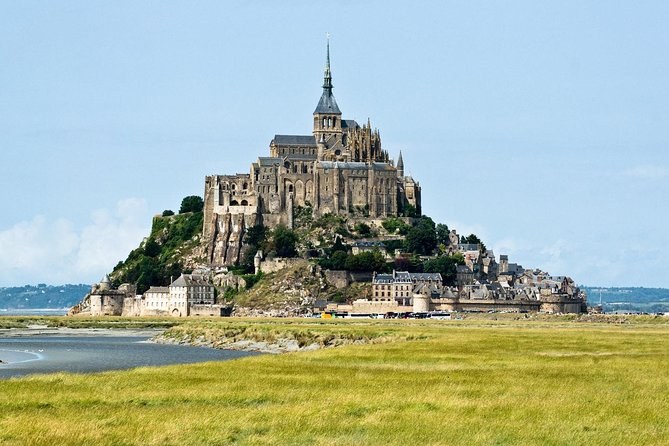
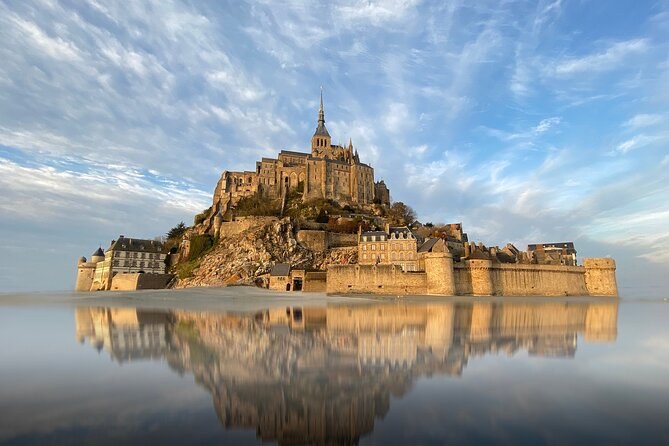
The bay swings about fourteen metres between low and high water, the largest range in continental Europe. A French tide coefficient from 20 to 120 tells you how big any given tide will be. Above 90 the sea returns visibly across the bay; above 100 it can reach the ramparts and flood the esplanade.
The biggest tides of any year cluster around the March and September equinoxes and the moons closest to them. If seeing the Mont surrounded by water is why you are going, that is where to look first — reading a coefficient takes a minute.
Month by month
Broad strokes, and every one of them is about crowds and hours rather than temperature. Planning your visit has the seasonal hours in one table:
- January to March. Shortest hours, cheapest parking, free first Sundays, and an island you can walk around. The equinox tides arrive at the end of March.
- April. Hours still winter, crowds building, and often the biggest tide of the year in the second half of the month.
- May to August. Long hours, the highest parking band from 1 July, and the busiest streets. The 1 May closure catches people.
- September. Hours drop on the 1st, the equinox tides arrive mid-month, and the European Heritage Days make entry free. Arguably the best month.
- October to December. Quiet again, free evening parking, and free first Sundays from November.
The year at a glance
| Abbey hours | Parking, 24 h | Crowds | Tide notes | |
|---|---|---|---|---|
| Jan – Feb | 09:30 – 18:00 | €14 | Lowest | Free first Sundays |
| Mar – Jun | 09:30 – 18:00 to 30 Apr | €22 | Building | Equinox tides in late March |
| Jul – Aug | 09:00 – 19:00 | €28 | Highest | Shuttle runs to 01:00 |
| Sep – 1 Nov | 09:30 – 18:00 from 1 Sep | €22 | Falling | Equinox tides, Heritage Days |
| 2 Nov – Dec | 09:30 – 18:00 | €14 | Lowest | Free first Sundays |
Abbey hours from the Centre des monuments nationaux; parking bands from the Établissement public. Tide notes are seasonal patterns, not dates.
Compare departures for your month
When is it least busy?
November to March, on a weekday, outside the free Sundays. The island has twenty-three permanent residents and three million-odd annual visitors, and they do not arrive evenly.
Within any month, the pattern is the same: quiet before ten, crowded from eleven to three, quiet again after four. Travellers say it repeatedly and from both directions — one recommends arriving as early as possible, another recommends the late afternoon.
Which hour of the day?
Before ten or after four, and it matters more than the month. A February midday is busier than a July breakfast. If you are on an organised departure from Paris your arrival time is not yours to pick, which is exactly what the 7am small-group starts are selling.
The other under-used hour is the evening. In July and August the shuttle runs until one in the morning and the Mont is lit; from September to June parking is free after 6:30pm. The day visitors have gone by then.
Is winter worth it?
Yes, with one caveat. You get the cheapest parking band of the year, free admission on the first Sunday of five different months, and an island you can actually move around on. The caveat is the five o’clock last admission: a December afternoon gives you very little abbey.
The compensation is that the Mont in low winter light, with the tide out across an empty bay, is the version of it that photographers come back for.
What high summer is actually like
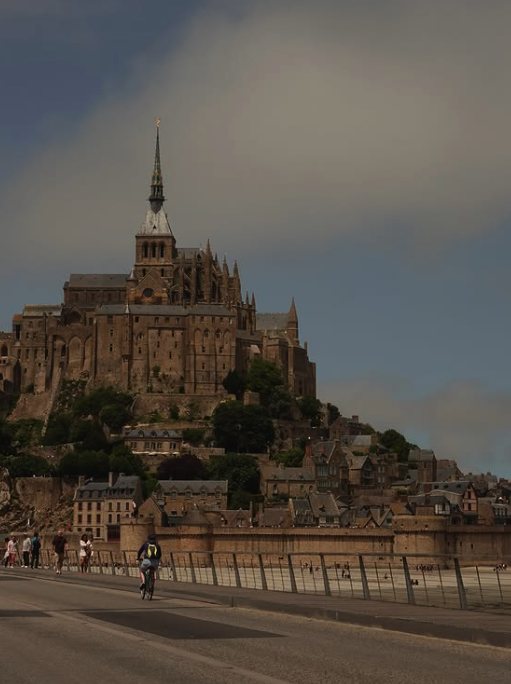
Long hours and a great many people. The abbey is open until seven, the shuttle runs until one in the morning, and the parking band is the highest of the year at €28 for 24 hours. The Grande Rue between eleven and three is the part travellers complain about, and the complaint is consistent.
None of that argues against going — it argues for arriving early and staying late. The window from five in the afternoon onwards is genuinely different from the middle of the day.
Timing a free day
Six opportunities a year: the first Sunday of January, February, March, November and December, plus the European Heritage Days in September. Admission costs nothing for everyone on those days.
They are also the busiest days of their months, and at least one operator drops its guided abbey visit on the September dates because there is no ticket to sell. If you are travelling on a free day, expect a queue and check what your fare still includes.
The case for the shoulder months
March, April, September and October do better on every measure that actually affects a visit, and they are the months most people skip.
Hours are still long enough. Even on the winter timetable the abbey runs to six, with last entry at five, which is more daylight than a day trip from Paris can use. Parking sits in the mid band at €22 for 24 hours rather than the €28 of high summer. Crowds are noticeably thinner than July and August without being a winter ghost town.
And the tides are at their best. The largest coefficients of the year cluster around the March and September equinoxes, which is when the sea actually returns across the bay rather than sitting on the horizon. If you have any freedom over the date, the second half of September is the single best fortnight of the year here — check the coefficient before you fix it.
Dates the abbey is shut or different
Three closures a year and one recurring exception, and all four catch people:
- 1 January, 1 May and 25 December. The abbey does not open at all. 1 May is the worst of the three, because it falls on the day the summer hours are supposed to start.
- The European Heritage Days in September. Free entry, no ticket to sell, and at least one operator drops its guided abbey visit on those dates as a result.
The village, the ramparts and the parish church are unaffected by any of these — they never close. The abbey page has the admission table.
The best month for photographs
Late winter and early spring, for two reasons that have nothing to do with warmth. The light is low and long, which suits a grey granite silhouette far better than a high summer sun. And the equinox tides in late March are among the biggest of the year, which is when the water actually comes back.
The two vantage points are the Pont-passerelle at water level and the west terrace ninety metres up. Both want you there about two hours before high water rather than at it — the tide page explains why.
How far ahead to book
Tide coefficients are published a year in advance, so if you are travelling for a big tide you can plan the date long before you book anything. Abbey slots for the middle of the day go first in summer; the 9:30 and 3:00 windows hold longer.
For departures, remember that most refund in full at 24 hours, which makes booking early low-risk. The exceptions are the three trips that want six or seven days’ notice and the abbey ticket itself, which does not refund at all.
The practical order is therefore: pick the month from the tide table and the abbey’s season, pick the day of the week to avoid a weekend in high summer, then book the departure last because it is the piece you can still change. Accommodation near the Mont in July and August is the one thing that genuinely runs out.
Frequently asked
Are there days when the abbey is free for everyone?
Yes. Admission is free on the first Sunday of January, February, March, November and December, and during the European Heritage Days in September. Those are also the busiest days of their respective months.
What time should I arrive to avoid the crowds?
Before ten in the morning or after four in the afternoon. The coach parties from Paris arrive in the middle of the day, which is exactly when travellers describe the Grande Rue as hard to move along.
When does Mont Saint-Michel become an island?
Only on the biggest tides, a handful of days a year, when the sea covers the car park causeway and surrounds the rock completely. The 2014 bridge stands on piles so the water can pass beneath it rather than damming the bay.
When is the best time of year to visit?
May to September gives you the abbey’s longer hours, 09:00 to 19:00, and the warmest weather. From September to April the abbey closes at 18:00, parking is cheaper and the island is quieter.
Every way to reach the abbey is compared on price, hours on the island and what the fare covers: mont saint michel and its bay tours. The full list sits on Mont Saint-Michel Tours.
Tours that fit this guide
Departures that reach the island while the light and the water are worth it.